The End of Siloed Buying: Why AI Orchestration Is the New Media Operating System
Introduction
The average marketing team now uses 16 or more technology solutions. Yet most of those solutions don't talk to each other. The result is a messy system of manual data handoffs and delayed responses. And somewhere in that mess, value disappears.
The Scale of the Problem
For years, the narrative around marketing technology was one of abundance. More tools, more channels, more data. But abundance without architecture quickly leads to friction. And the numbers make this painfully clear.
66% of marketers are already using 16 or more marketing solutions, yet most of those systems were never designed to work together.
The Gartner 2025 Marketing Technology Survey tells a similarly sobering story: martech utilization has fallen to just 49% of available capabilities, and only 15% of organizations qualify as high performers by meeting strategic goals and demonstrating positive ROI. Organizations are getting less value from the technology they have implemented.
Martech utilization has dropped to 49% of available capabilities, down from 58% in 2020. Only 1 in 3 capabilities in the average stack is actively used.
The downstream cost of this underutilization is measurable. Gartner estimates that companies with annual revenues of $250 million can lose up to $4 million per year to martech that sits unused. McKinsey's own analysis of Fortune 500 marketing officers found that not a single one could quantify the ROI of their martech investments, despite consistently increasing spend year over year.
Fragmentation is a Structural Problem
The instinct is to solve fragmentation by adding more. A new integration layer here. A reporting dashboard there. A data warehouse to aggregate everything. But this logic compounds the issue. Each new tool adds another node to an already overloaded network.
McKinsey is explicit on this: the answer is not more platforms but a connective intelligence layer. As their partner Robert Tas puts it, you need to leverage AI to orchestrate across all your platforms: a layer that connects the dots across systems that were never designed to talk to each other.
"You need to leverage AI to orchestrate across all your platforms. You need a layer across to connect the dots and all those things that don't talk to each other." — Robert Tas, Partner, McKinsey & Company
What an AI Media Operating System Actually Looks Like
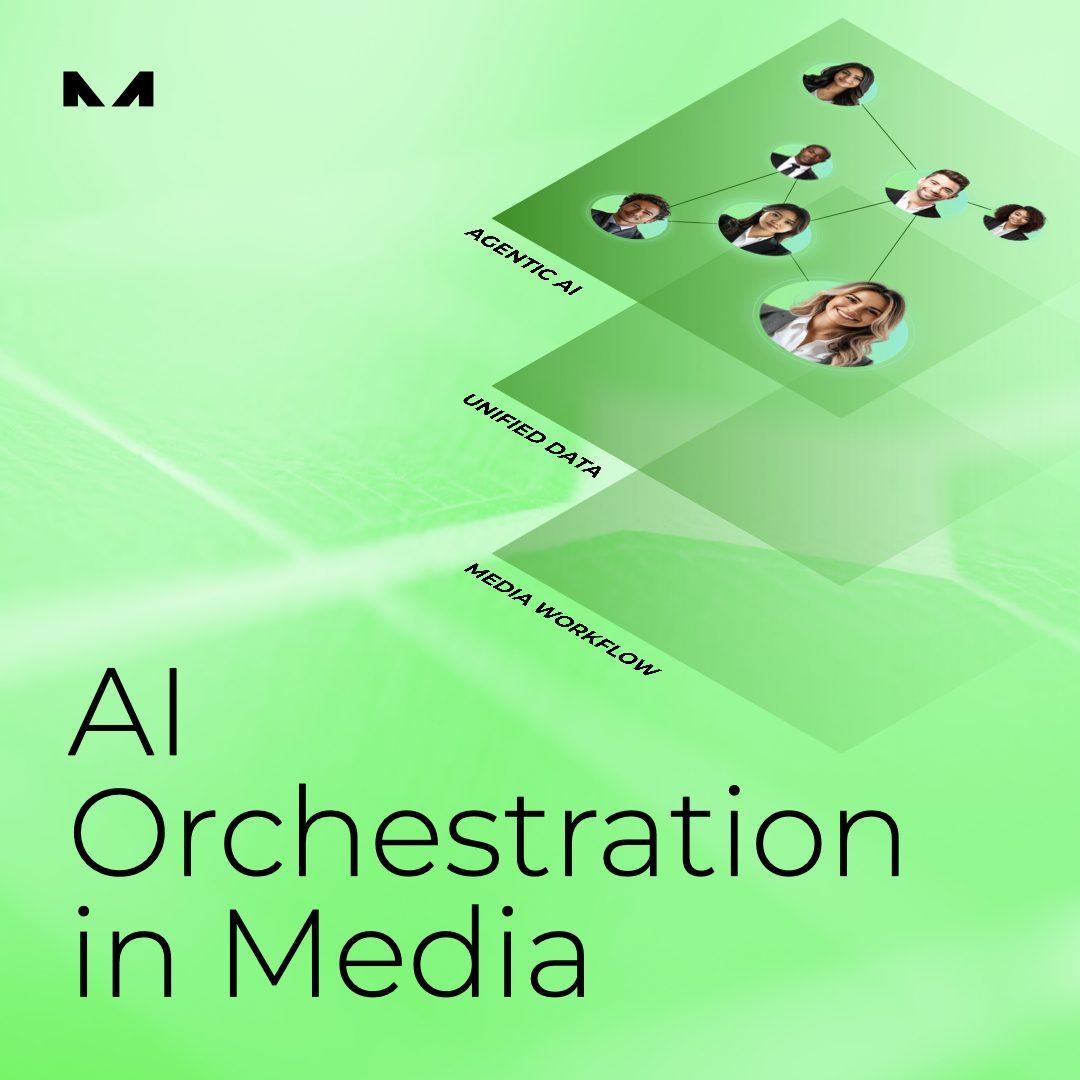
McKinsey's agentic AI research describes the emerging model clearly: specialized agents handle complex, contextual tasks; generalist agents synthesize data and generate content; and orchestration agents direct and coordinate the whole system. The result is a set of workflows that evolve continuously: not a static campaign machine, but a living media operating system.
McKinsey estimates that agentic AI will account for more than 60% of the incremental value AI generates in marketing and sales, and that AI could unlock $2.6 to $4.4 trillion in annual value globally, with up to 20% concentrated in marketing and sales alone.
The practical implication for media leaders is significant: the unit of competitive advantage is no longer the campaign, but the system that runs it. The organizations winning in 2026 are those who have moved from buying media by channel to planning media by outcome, with an orchestration layer that executes, tests, learns, and reallocates in real time.
From Cost Engine to Growth Centre
Media planning is the natural starting point for this transformation. It is the function that sits at the intersection of data, budget, creative, and channel and it is historically the function most exposed to siloed decision-making. An orchestration platform that operates from media planning outward (connecting briefing, buying, trafficking, and measurement into a single intelligent loop) is a new operating model.
Media operations are already changing. Organizations need to decide whether they want to be part of that change or deal with the impact later on.
Built from media planning outward, MINT serves as the orchestration layer across the media process. It connects to the data, tech stack and workflows advertisers already use, and brings planning, buying, trafficking, and measurement into one working model. That is the foundation for faster, more connected media operations, and that is what MINT is built to deliver.