AI Agents for Agencies: Reducing Campaign Complexity Without Burning Out the Team
Introduction
As campaigns multiply across channels and markets, complexity rises faster than headcount. AI agents help agencies automate repetitive operational work, reduce coordination risk, and protect team focus—so growth doesn’t come at the cost of burnout.
The scaling challenge for independent agencies
If you run campaigns for multiple clients, you already know the pattern: the work does not scale in a straight line. Every new channel, market, and reporting request adds more coordination, more checking, and more risk of small mistakes turning into big problems.
Independent agencies feel this in a very specific way. Clients expect speed, control, and consistency that look enterprise-grade, while the agency has to deliver it with lean teams and limited engineering capacity. At the same time, the market is turning into an AI tool race, and building a serious solution in-house has become a job on its own.
This is where AI agents can help, as long as they are used for the right kind of work: operational tasks that repeat every day, require constant attention, and soak up hours without making anyone more strategic.
How can agencies use AI to manage campaign complexity?
Campaign complexity does not come from one place. It comes from a stack of small things that happen across the week: checks, updates, handoffs, exports, fixes, reconciliations, and the constant “what changed?” questions that appear mid-flight.
AI agents help agencies manage this because they are well suited to work that is operational, repeatable, and ongoing. A lot of agency time goes into monitoring, checking, and pulling context together across platforms. That work keeps campaigns stable, but it rarely creates an edge on its own. Agents add value because they handle the repetitive work fast and consistently, and they reduce the manual slip-ups that happen when people are forced to move quickly through routine tasks.
Three areas usually show value first:
In-flight pacing and delivery control
Pacing is relentless. Teams check spend and delivery across platforms, then translate what they see into actions and updates. Agents can help by keeping a continuous watch, highlighting what is drifting, and showing the relevant context so the human owner can decide what to do next.
Setup QA and trafficking checks
Many campaign problems start with preventable setup inconsistencies: naming and taxonomy, UTMs, creative specs, missing fields, tracking alignment. These checks are repetitive and easy to standardize, which makes them a great early use case. The benefit is simple: less rework mid-flight and cleaner reporting later.
Reporting preparation and change tracking
A lot of reporting time is spent assembling the same baseline view every week, then answering follow-up questions about what moved and why. Agents can help by preparing that baseline consistently and pulling together the “what changed” context, so humans spend more time interpreting and advising instead of rebuilding.
Why multi-agent systems matter in agency work
A single agent can be helpful, but agency environments usually need more than “one AI that does everything.” The work is too varied, the stakes are too high, and the risks become real the moment budget changes enter the picture.
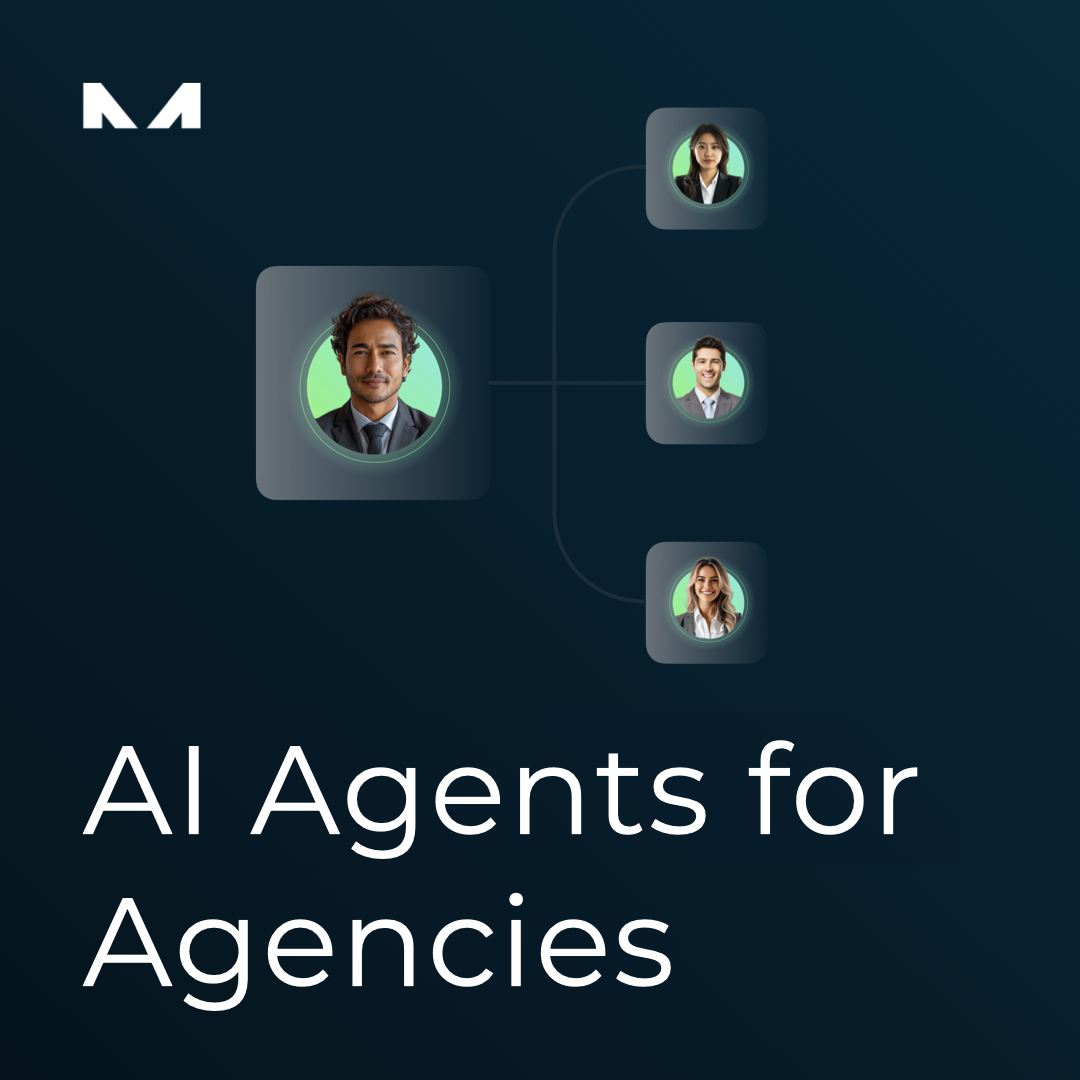
Multi-agent systems solve that by splitting work across specialists. One agent focuses on pacing, another on reporting consistency, another on financial reconciliation. Each stays narrow enough to be reliable, which is one reason multi-agent setups tend to hold up better in daily operations.
Just as important: multi-agent systems add a built-in “second set of eyes.” In practice, this looks like a Supervisor agent that reviews outputs from the specialist agents, checks calculations and logic, and flags recommendations that look off before they reach a human decision-maker.
This matters because hallucinations are a real operational risk, and that risk gets amplified when money is involved. A confident but incorrect interpretation can point budget toward the wrong channel, the wrong audience, or the wrong tactic, simply because a flawed assumption slipped through and nobody had a structured review step.
That is why agency-grade agent systems need an explicit checking step. Spend-moving recommendations should pass through review rules (thresholds, approvals, and documentation), and the system should be designed so the supervisor layer can challenge, verify, and force clarification before anything progresses. Some systems also use multiple underlying models to cross-check the reasoning, which adds another layer of protection against confident mistakes.
The independent agency reality: build vs. buy is no longer theoretical
For independent agencies, the “AI arms race” creates a practical question: build something internally, or buy from a vendor.
Building can work for narrow internal tools, but a real agent system requires ongoing work: continuous testing, monitoring, updating, and ensuring reliability as platforms change. It also requires the discipline of regularly evaluating which underlying models perform best for which tasks, and updating accordingly. That is not a one-time project, but an ongoing product effort.
This is why many independents lean toward buy. A vendor’s advantage is focus and scale: specialist talent, QA cycles, security and governance work, and continuous improvements that keep the system dependable year after year.
Talent shortage: the biggest win is keeping good people
This part is often under-discussed. Agencies have felt a talent squeeze for years, and early-career roles are especially vulnerable to burnout when day-to-day work is dominated by repetitive cleanup.
Agents can shift the shape of the work. Instead of spending years building spreadsheets, reconciling exports, and doing routine checks, junior talent can spend more time learning how to interpret performance, diagnose issues, and contribute to strategic decisions. That is better for retention and better for client value.
What is the best software for managing multi-channel ad campaigns?
For agencies, “best software” rarely means the tool with the longest feature list. It means the tool that reduces fragmentation, because fragmentation creates operational drag. A practical evaluation lens that holds up in agency environments:
- Does it connect to the systems you already use, so the work does not require constant exporting and reformatting?
- Does it support real workflows (brief → setup → launch → in-flight changes → reporting), rather than acting as another reporting surface?
- Does it make responsibilities and approvals clear, so decisions do not vanish into chat threads?
- Does it keep a record of changes and decisions, so reporting and reconciliation do not become detective work?
- Does it help standardize naming, taxonomy, and QA checks without forcing a rigid one-client-only operating model?
If a tool does not reduce manual coordination and repeated checking, agencies end up with one more system to maintain.
What software should I use to optimize advertising workflows?
Workflow optimization starts by looking at where time goes that does not improve the campaign but only keeps it from breaking.
For most agencies, the repeat offenders are trafficking checks, in-flight pacing oversight, recurring status updates and reporting prep, and reconciliation and governance tasks. Software earns its place when it makes those workflows faster, cleaner, and more consistent, while keeping humans in control of decisions that move money.
This is also where build vs. buy shows up again: if the goal is durable operational improvement, the system has to keep improving over time, not ship once and stay static.
Where MINT fits for independent agencies
Multi-agent systems, supervision, and human control are not abstract ideas at MINT. They sit at the center of how the company describes its agentic approach: specialized agents working together, with humans in control, and systems designed to reduce error and increase accountability.
And for independent agencies, the resourcing argument becomes very tangible. MINT employs over 100 professionals in product development and engineering. For most independents, building and maintaining a comparable AI and workflow capability in-house would mean becoming a software company on top of being an agency.
For the first time in a long time, independent agencies have a real chance to close the gap with the biggest players by pairing strong operator talent with best-in-class technology. When the repetitive work gets absorbed by reliable systems and multi-agent setups that are built with governance in mind, teams spend less time firefighting and more time delivering the work clients actually value.